

You’ve probably heard it before: simplicity is the ultimate sophistication. But in web design, that idea is harder to execute than it sounds. Anyone can pile on plugins, colors and animations.
Far fewer designers know how to strip a page down to exactly what matters and make it look breathtaking in the process.
That’s what this guide is about. We’ve curated 15 genuinely impressive simple websites. From minimal portfolios to clean ecommerce stores and modern business sites, that prove less really is more. For each one, we’ve pulled out the key design takeaways you can apply to your own projects right now.
And if you’re building on WordPress, we’ll show you how Element Pack Pro gives you everything you need to recreate these clean, minimal looks without touching a single line of code.
Let’s get into it.
Why Minimalist Web Design Keeps Winning
It is easy to assume minimalism is just a style trend that will eventually cycle out. It will not.
The reason clean website design continues to dominate is grounded in how real users actually behave online and understanding that makes every design decision easier and more deliberate.
Research consistently shows that visitors form a judgment about a website in under half a second.
That judgment is driven almost entirely by visual design. A clean, uncluttered layout communicates professionalism and trust almost immediately, while a busy page creates friction and erodes confidence before a single word is read.
Here is why minimal website design continues to outperform its cluttered counterparts:
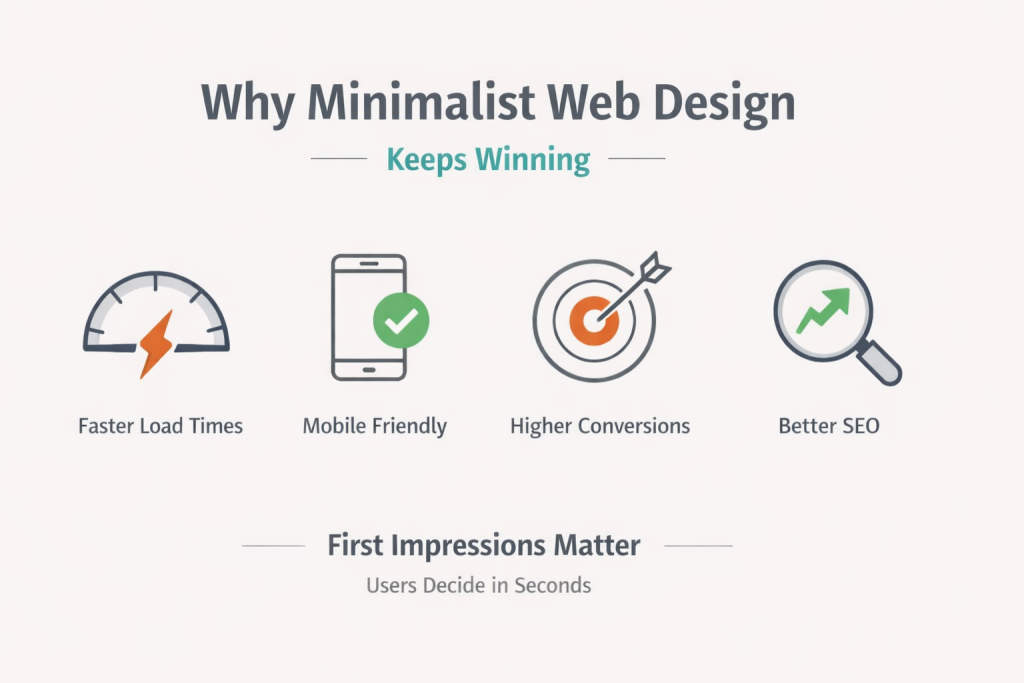
- Faster load times. Fewer elements mean lighter pages. Google’s Core Web Vitals reward fast-loading pages with better rankings and users are significantly less likely to bounce from a page that loads quickly.
- Better mobile experience. Simple layouts translate naturally to smaller screens. A site designed with restraint is almost always a responsive simple website by default, without extra effort.
- Stronger conversion focus. When you cannot rely on decoration to fill space, every CTA, headline and image has to earn its place. That discipline produces sharper, more conversion-oriented pages.
- Lower cognitive load. Visitors make decisions faster on uncluttered pages because they are not processing unnecessary information. Fewer distractions means a faster, more direct path to whatever action you want them to take.
- Higher perceived quality. Whitespace signals confidence. Brands that use it generously are consistently perceived as more premium and trustworthy, often before the copy is even read.
- Better SEO. Clean code, logical structure, fast load speed and mobile friendliness are natural byproducts of minimalist web design and all of them contribute to stronger organic rankings over time.
For SaaS companies especially, the stakes are even higher. A confusing homepage costs you trials and demos before a visitor even scrolls. A simple, benefit-focused layout that communicates the product in five seconds is not just good design practice. It is a direct revenue advantage.
If you are building with Elementor and want to get the structure right from the very start, the walkthrough on how to use Elementor in seven simple steps is a great place to set yourself up properly before you start building.
15 Simple Websites That Nail Minimalist Design in 2026
These clean website design examples come from Sweden, Estonia, Germany, Denmark, Spain, the Netherlands, South Africa, Australia, Scotland, Japan, the UK and beyond.
Good design has no geography and neither does this collection.
1. Bedow: The Creative Agency That Trusts Its Work
Website: bedow.se

Bedow is a Stockholm-based design studio whose website might be one of the best examples of clean website design inspiration available online right now. The homepage opens with a full-screen clickable video: no hero text, no CTA button, just the work speaking for itself.
Navigation uses a distinctive waving hand icon instead of a hamburger menu, which opens an elegant overlay.
The philosophy here is radical confidence: the studio trusts its portfolio so completely that it needs almost nothing else to make an impression.
Key Takeaways:
- Replace the standard hamburger icon with something that reflects your brand personality.
- Use a video hero only if you have genuinely compelling footage. Done right, it communicates more in three seconds than a paragraph of copy.
- A one-color, typographically focused layout can carry enormous visual weight.
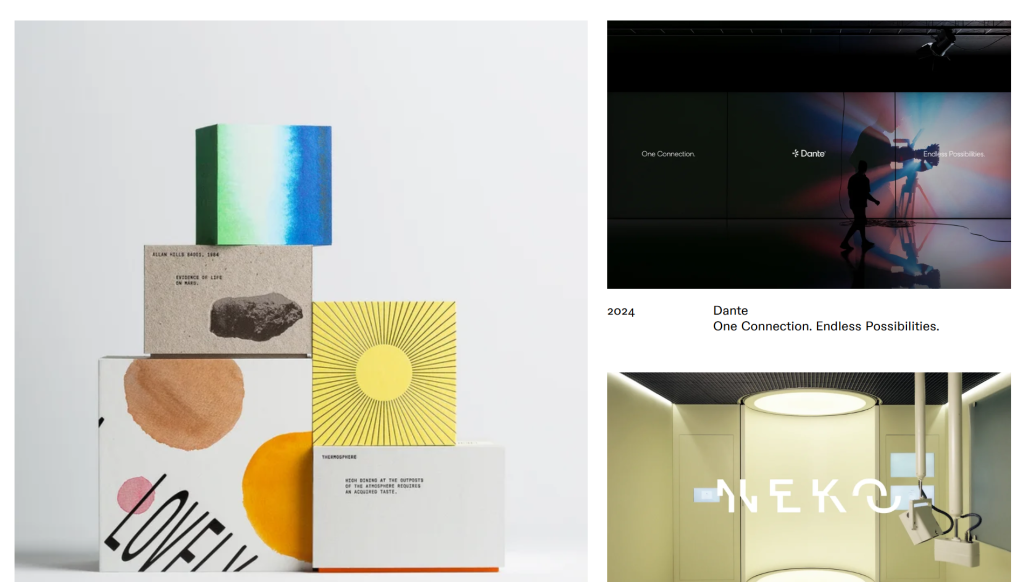
This is one of the best examples of creative simple websites that use motion without becoming chaotic.
2. Mogutable: Minimal Ecommerce Done Right
Website: mogutable.com
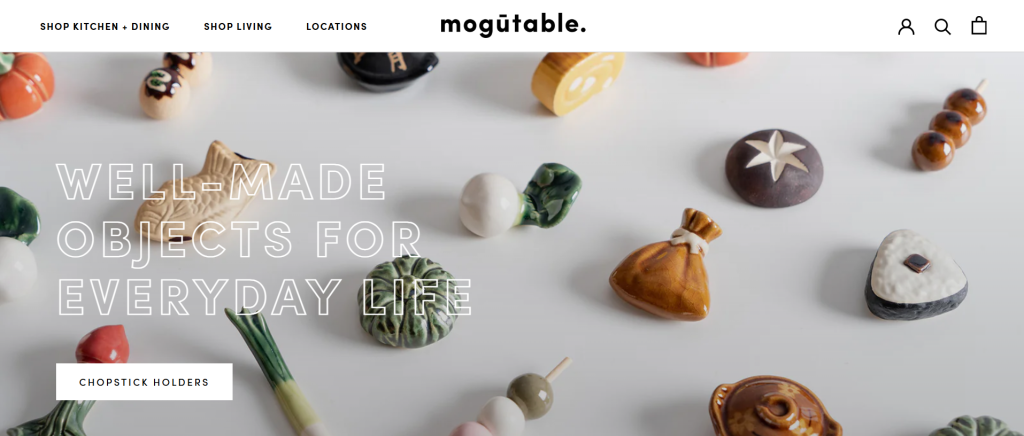
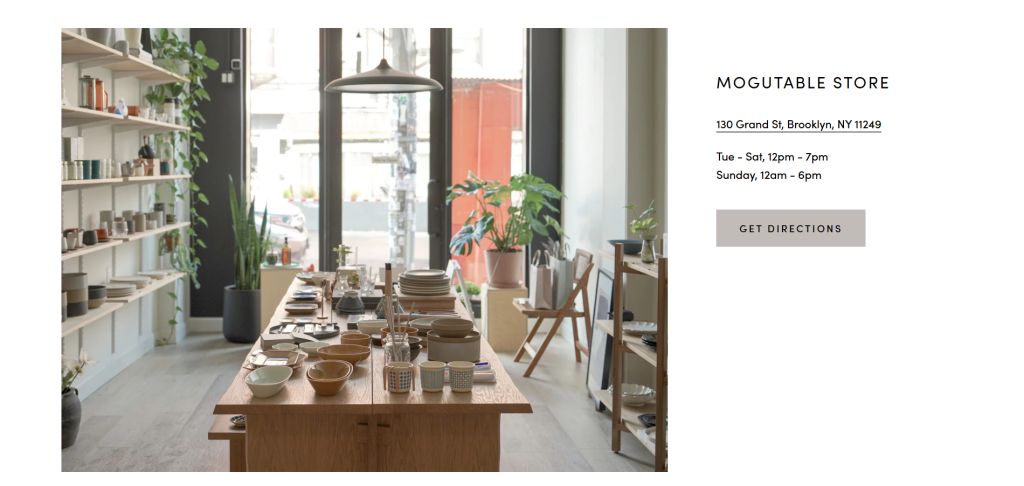
Mogutable sells home products and its website is a masterclass in simple ecommerce website design. Rather than cramming a grid with small product thumbnails, the site uses large, editorial-style photography on a neutral background.
Product names appear in small, restrained types. Hover states reveal subtle image transitions without any jarring animation.
This is the rare ecommerce site that feels like browsing a magazine rather than a catalog. It removes every element that doesn’t either showcase the product or guide the user toward purchase.
Key Takeaways:
- Neutral backgrounds (warm whites, light grays) let product photography do the heavy lifting.
- Keep product descriptions brief on listing pages — let the click-through reveal depth.
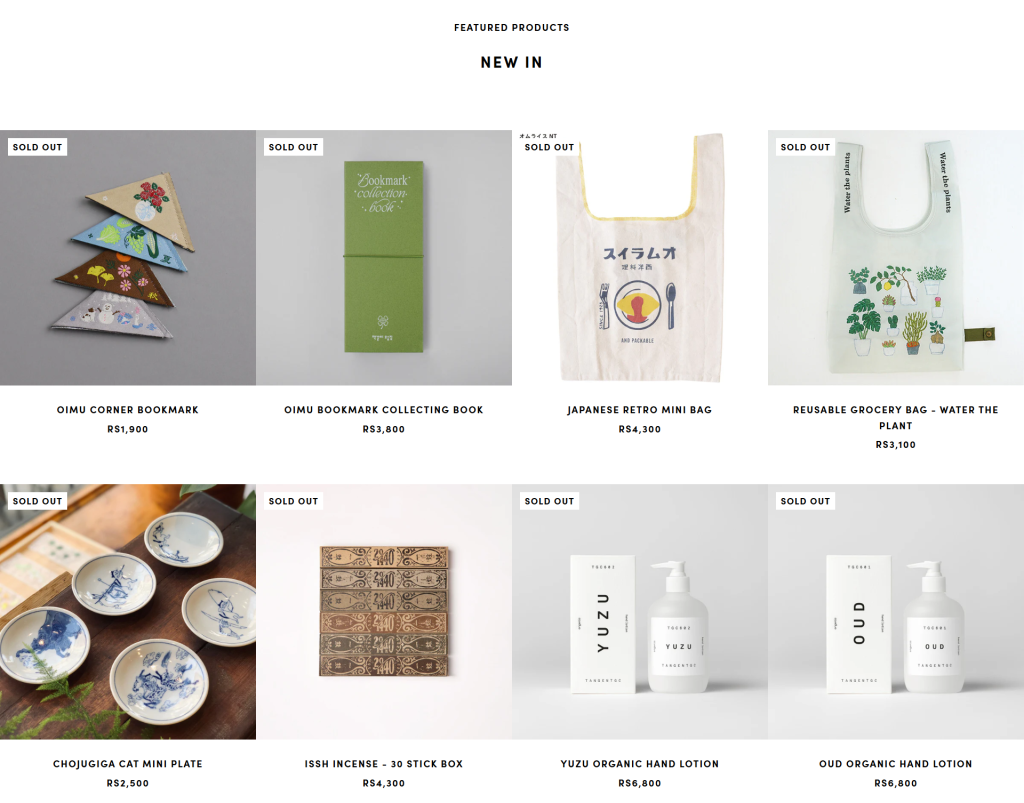
- Consistent image aspect ratios across a grid create automatic visual harmony.
- A great reference point for modern UI design inspiration in the ecommerce space.
3. Lars Tornoe: The Two-Column Portfolio
Website: larstornoe.com
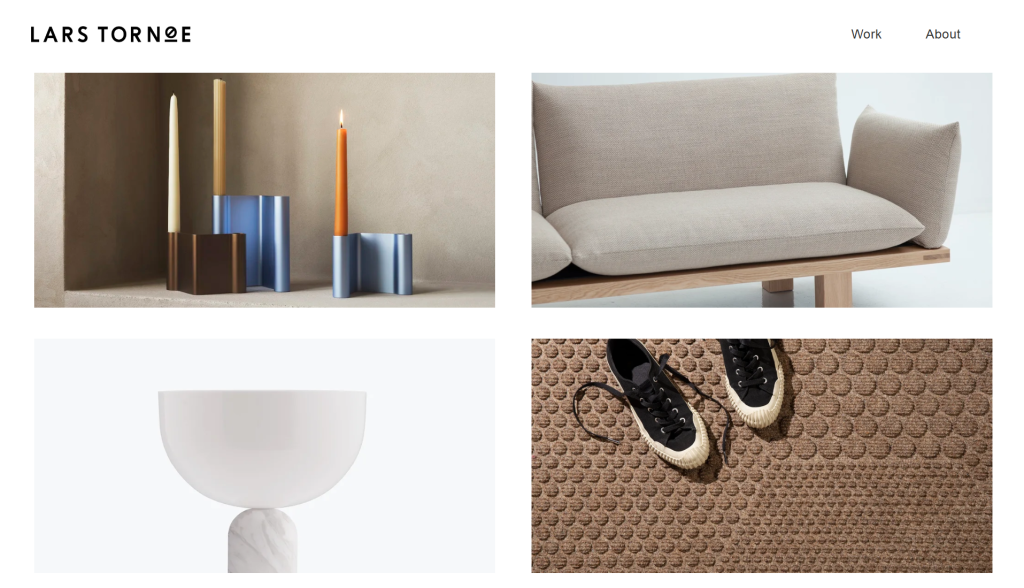
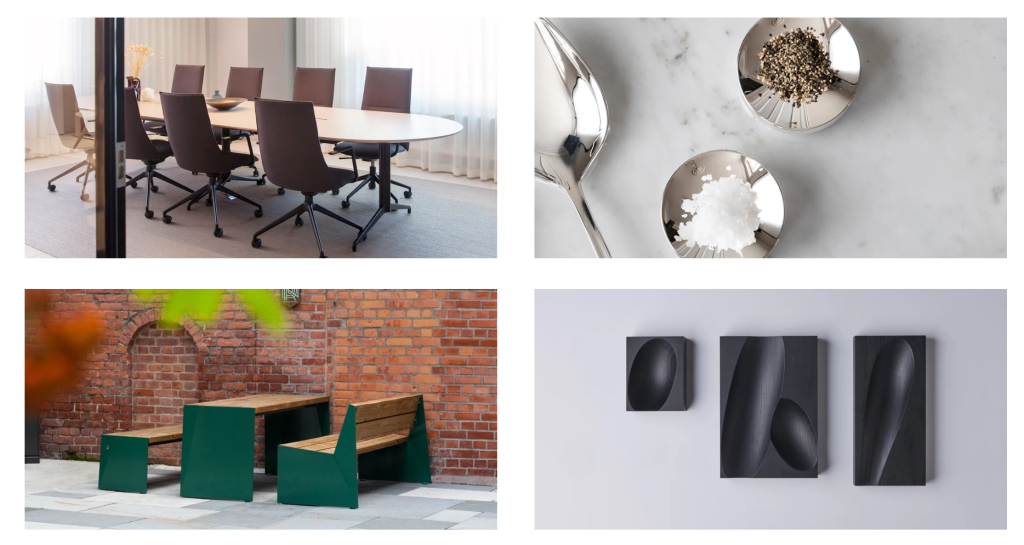
Lars Tornoe’s portfolio is immediately striking in its restraint. The homepage is a clean two-column grid of work items, each with hover effects. The header has just two links on the right and a logo on the left.
There is no footer on the main portfolio page (it only appears on individual project pages). The entire site functions as a focused, distraction-free showcase.
This is one of the most copied layouts in minimal portfolio websites right now.
Key Takeaways:
- Two-column grids feel curated rather than crowded; perfect for visual portfolios.
- Omitting the footer on the main page removes an exit point and keeps focus on the work.
- Hover effects add interactivity without requiring heavy JavaScript.
- Excellent website layout inspiration for designers, photographers and illustrators.
4. Kinfolk: Whitespace as a Design Statement
Website: kinfolk.com
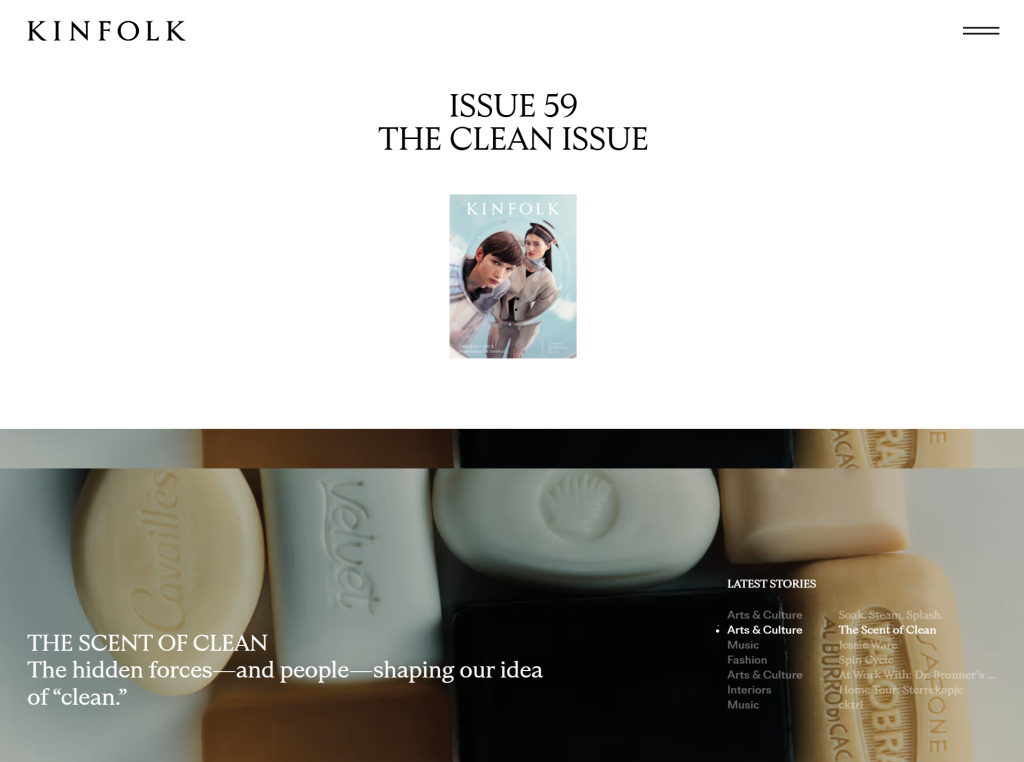
Kinfolk is a lifestyle magazine that carries its editorial DNA straight into its website. The dominant design choice is whitespace deliberately deployed to slow the reader down and make each image feel like it belongs in a gallery.
Typography is restrained and elegant, body copy is given generous line-height and every section breathes.
If you’ve ever felt that your website is “too empty,” Kinfolk will recalibrate your thinking. The empty space isn’t a problem, it’s the point.
Key Takeaways:
- Generous whitespace elevates content and signals quality; don’t be afraid of it.
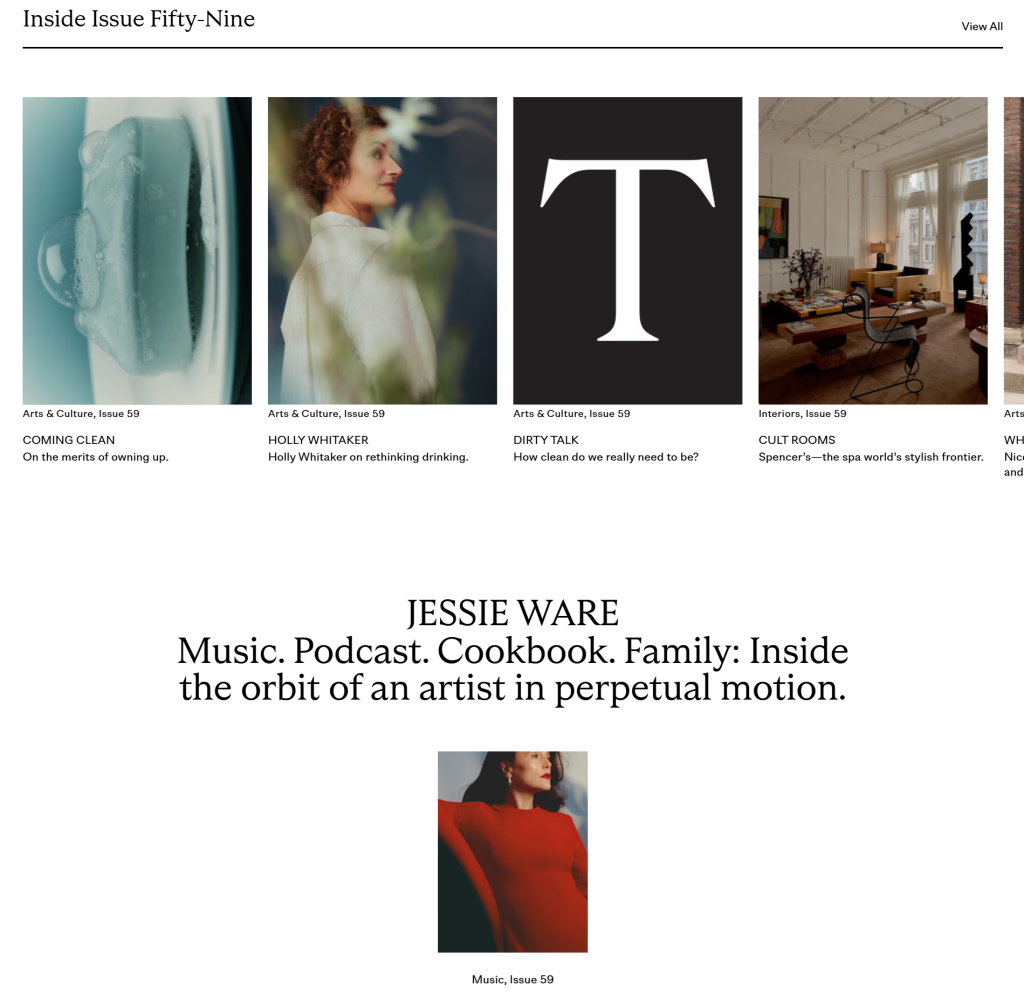
- Serif typefaces at tasteful sizes create an editorial, premium feel.
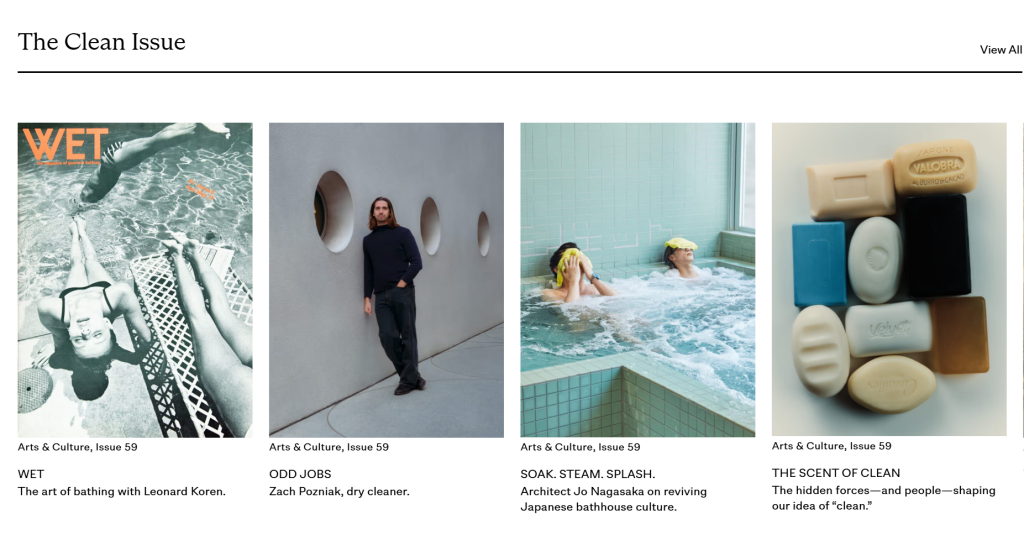
- A muted, consistent color palette (cream, black, warm gray) creates cohesion without monotony.
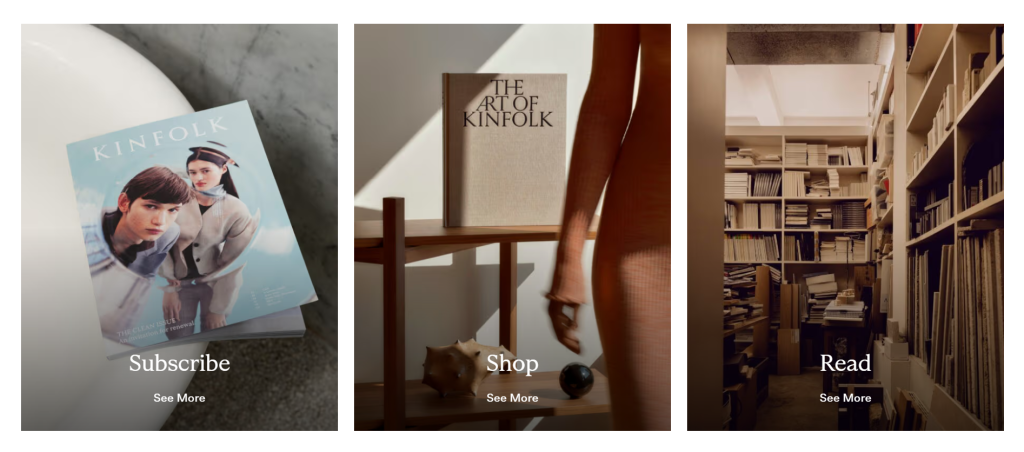
- One of the best clean UI website examples for content-driven brands.
5. Linear: The SaaS Minimal Standard
Website: linear.app
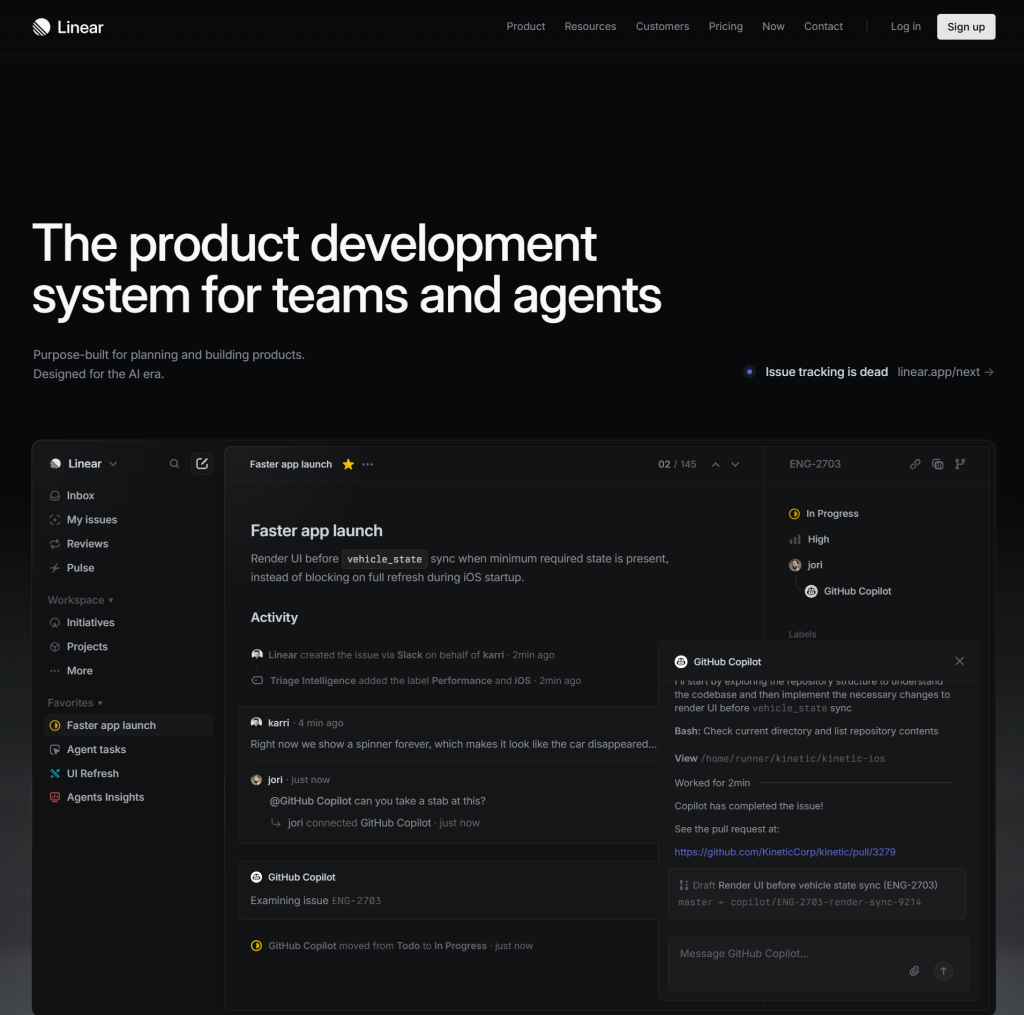
Linear is probably the most-referenced SaaS website in design conversations right now and the reputation is well-deserved.
The homepage uses a dark base with crisp white typography, giving the page visual depth without any unnecessary decoration.
Scroll-triggered animations demonstrate product functionality directly in context, so users understand what the tool does before they ever reach the features section.
Navigation is stripped to four links and nothing competes with the core message.
Key takeaways:
- Dark backgrounds with high-contrast typography create an immediate sense of sophistication for developer-facing SaaS products.
- Scroll-triggered product demos communicate value far more efficiently than static screenshots or written feature lists.
- Keeping primary navigation to four or fewer links reduces decision friction before a visitor has even read your value proposition.
- One of the clearest modern UI design inspiration references available for any software product globally.
6. Netil Radio: One-Page Simplicity
Website: netilradio.com
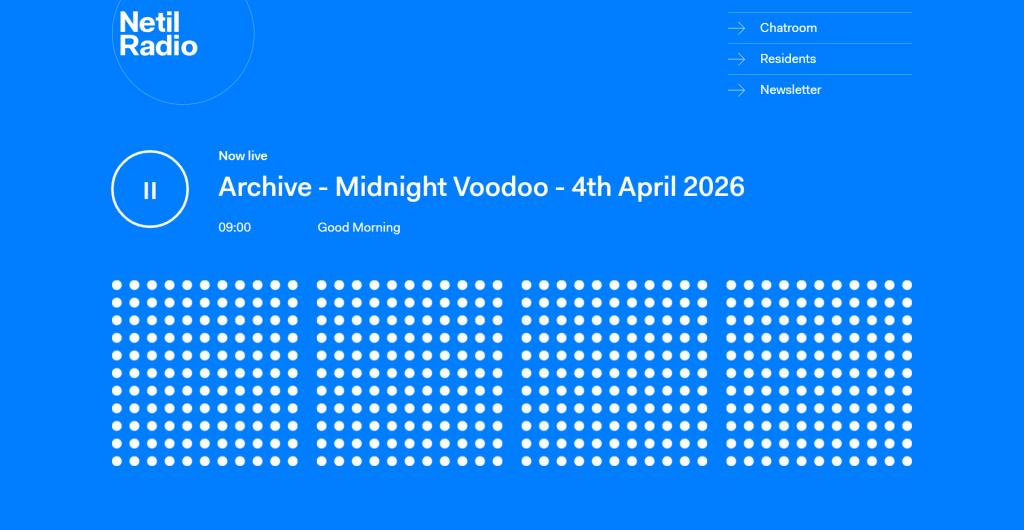
Netil Radio proves that even a vivid color can exist within a minimalist framework. The site uses a bright blue background but the overall design remains completely clean and simple.
The hero section has a play button, the name of the upcoming show and nothing else. It’s a one-page layout, with all content reachable in a few scrolls.
This is one of the strongest examples of a simple landing page design that prioritizes function. The user arrives, hits play and everything they need is right there.
Key Takeaways:
- A bold single color can be minimal: minimalism is about clarity, not just white space.
- One-page layouts and minimalist design pair naturally together.
- A single, prominent call to action (the play button) removes all decision friction.
- Great simple landing page design inspiration for event, music, or media brands.
7. ETQ Amsterdam: Clean Ecommerce With Transparent Navigation
Website: etq-amsterdam.com
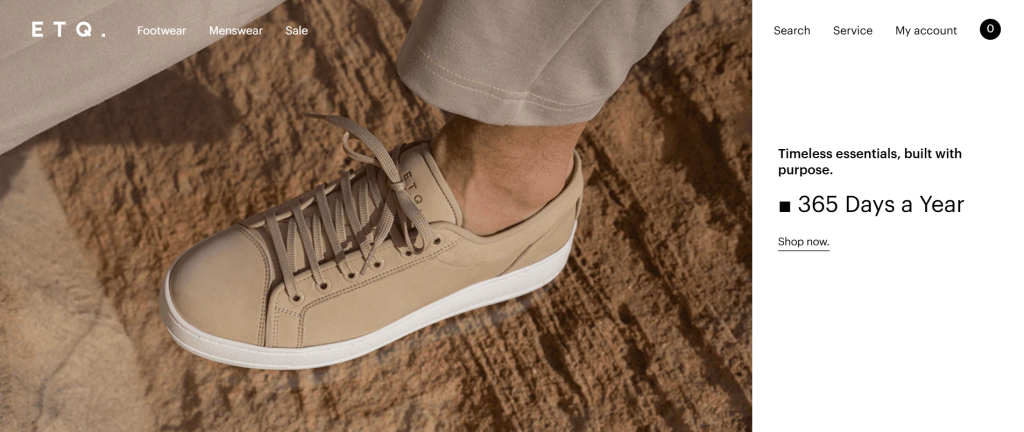
ETQ is a footwear brand with one of the most elegant homepage layouts in modern website design examples. The above-fold section splits into two-thirds image and one-third solid color with text and a link.
The header is fully transparent, fading in and out as you scroll. The footer uses the same background color as the rest of the site, so it doesn’t feel like a separate section.
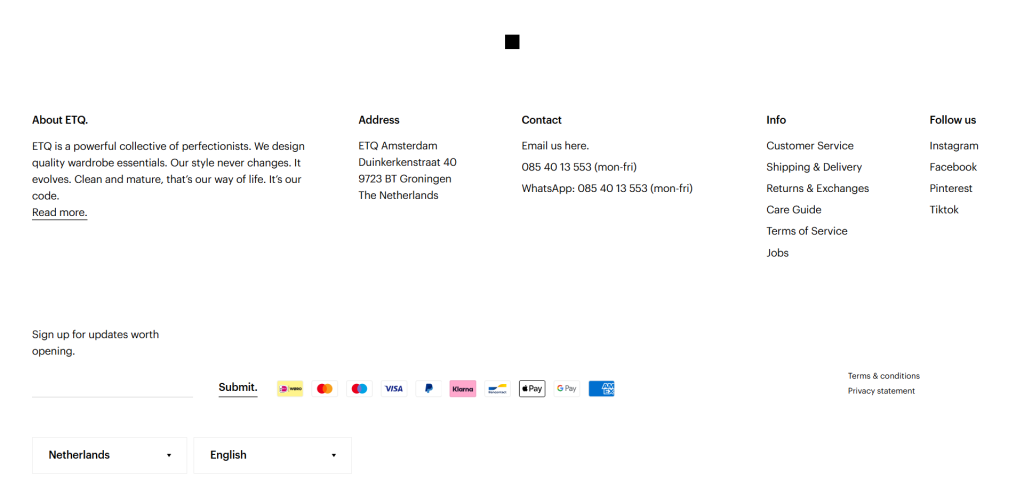
Every design decision is deliberate. No element competes with the product.
Key Takeaways:
- A transparent/floating header makes the hero image feel larger and more immersive.
- Matching header, body and footer backgrounds creates a seamless, unified feel.
- Splitting the hero into image and text panels is a versatile layout for any product category.
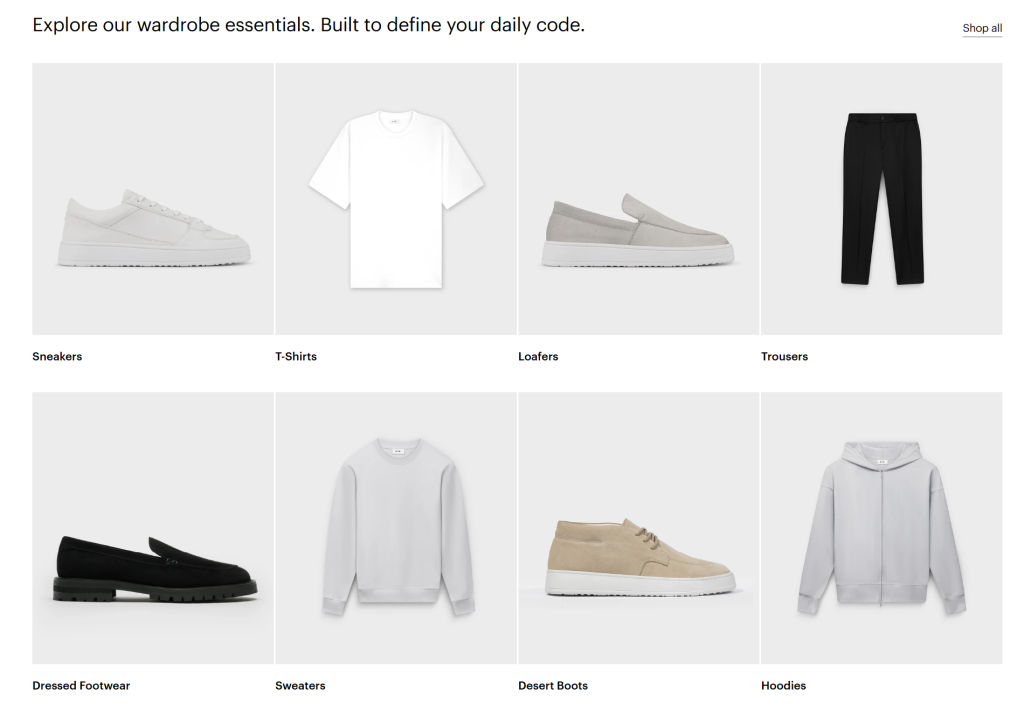
- One of the cleanest simple ecommerce website design references available.
8. Field Magazine: Consistent Background Across Everything
Website: fieldmag.com
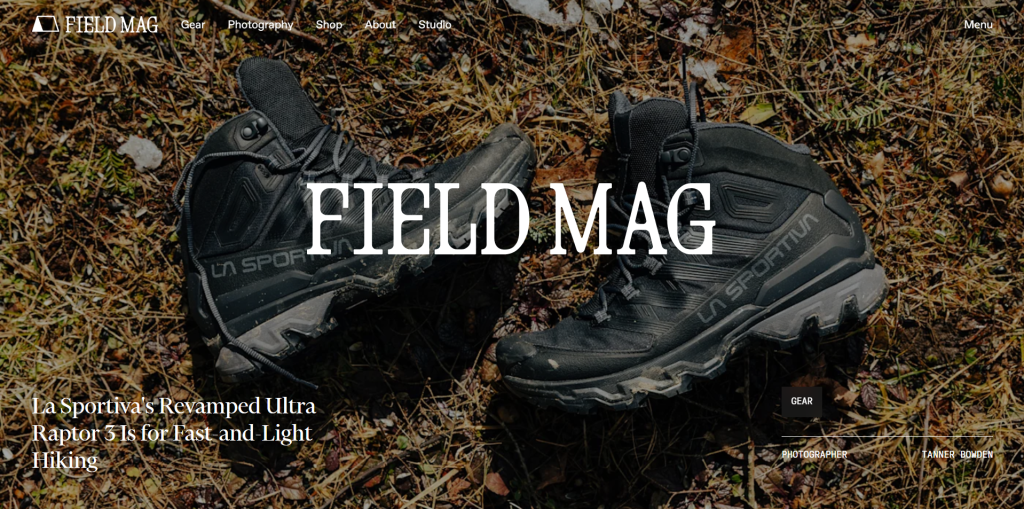
Field Magazine uses a consistent warm, earthy background color that carries through the header, every content section and the footer.
The result is a website that feels like a single, unbroken canvas rather than a collection of stacked sections.
The header disappears as you scroll and reappears when you scroll back up, a small touch that keeps the interface feeling uncluttered.
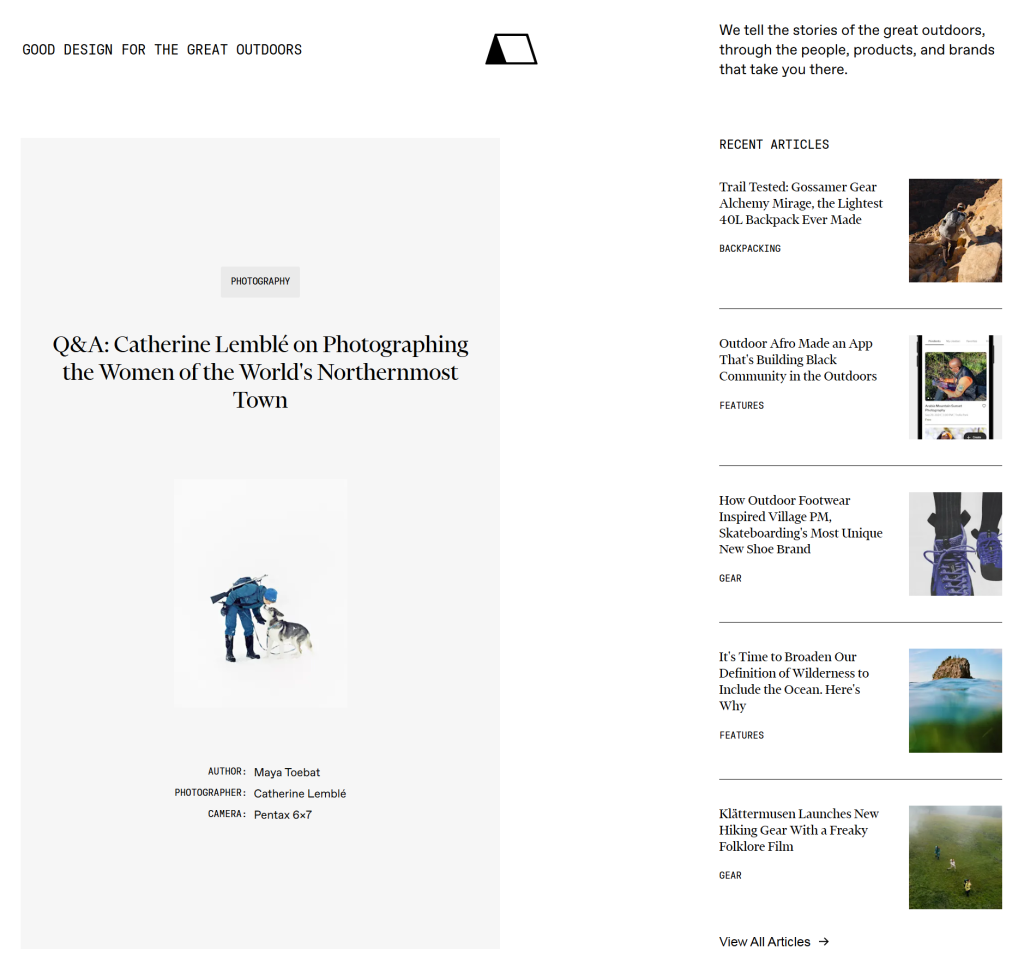
This approach is especially effective for lifestyle, travel and outdoor brands where mood and atmosphere are part of the product.
Key Takeaways:
- A single background color used consistently throughout the entire site creates a strong brand environment.
- Auto-hide navigation on scroll reduces visual noise while keeping it accessible.
- Warm, earthy palettes communicate authenticity and trust for lifestyle brands.
- Outstanding clean website design inspiration for content and publishing brands.
9. Aesop Skincare: Product-First Minimalism
Website: aesop.com
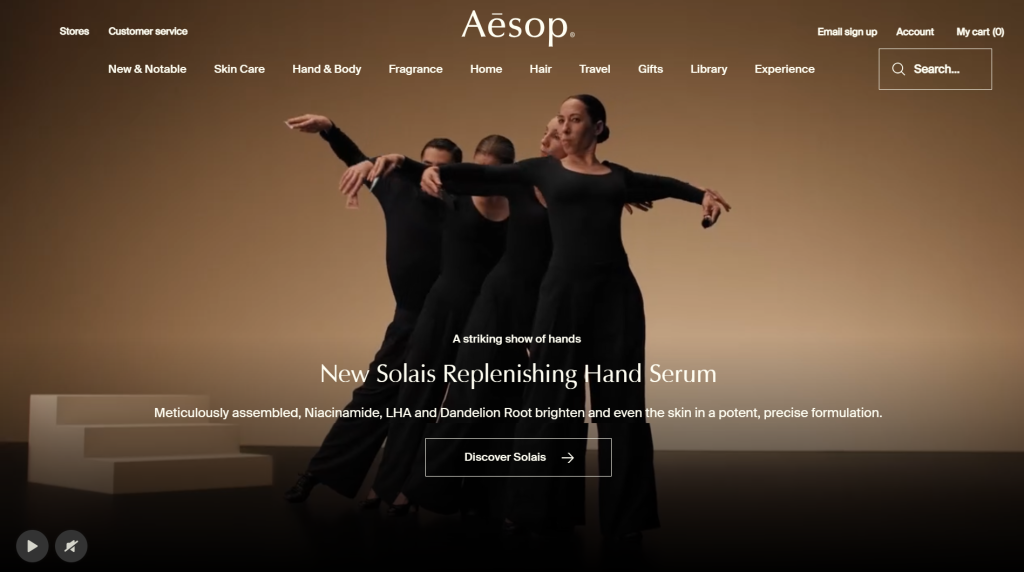
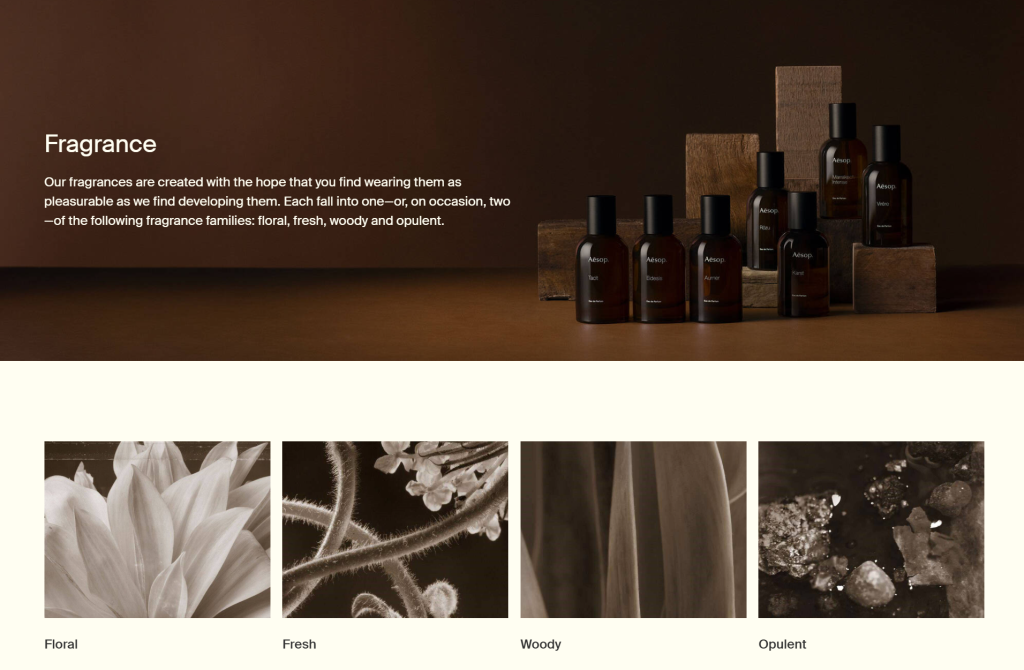
Aesop’s website is often cited in conversations about minimalist homepage design because it achieves something genuinely difficult: it feels premium without being cold.
Neutral tones dominate, the product photography is artful rather than clinical and the navigation surface-exposes categories through small collages rather than a traditional dropdown menu.
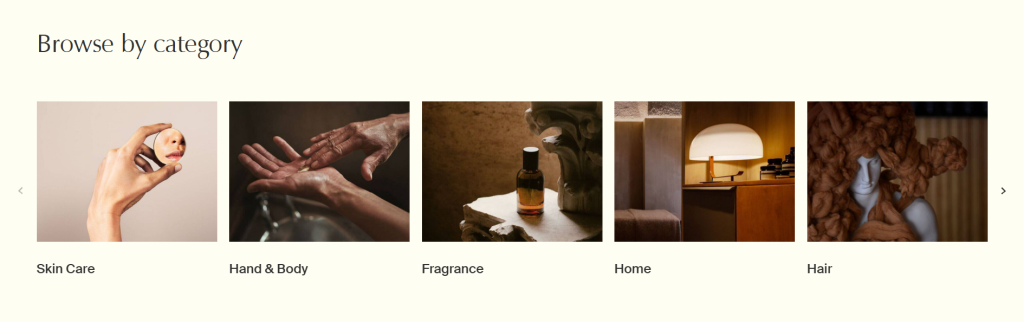
The philosophy is that the brand’s intellectual and aesthetic identity should speak through restraint.
Key Takeaways:
- Replace dropdown menus with visual collages or image-based navigation for a more editorial feel.
- Neutral tones (taupes, creams, warm grays) communicate sophistication without effort.
- Product pages that prioritize storytelling over feature lists create emotional connection.
- A benchmark in best website design inspiration for beauty, wellness and lifestyle brands.
10. Resend: Developer-First Clarity
Website: resend.com
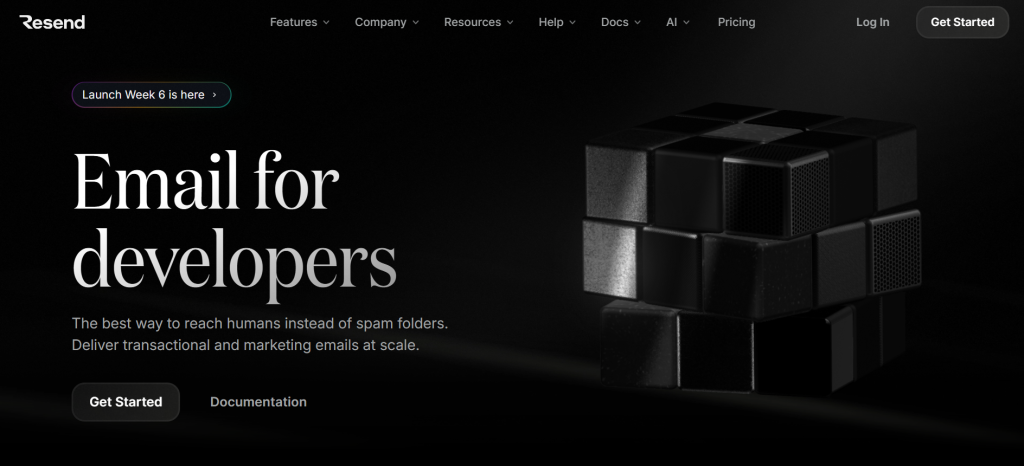
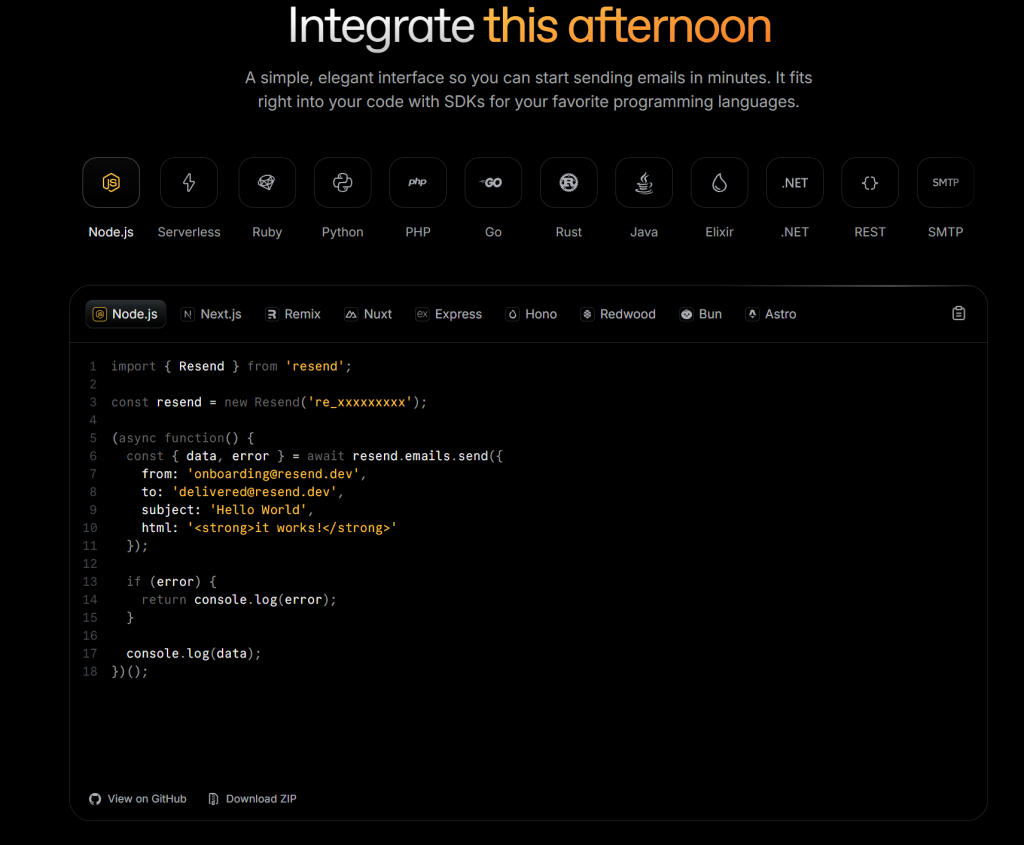
The moment you land on Resend, you know exactly who it is for and what it does. “Email for developers” sits above the fold in a large, clean sans-serif with a live code snippet immediately beneath it.
There is no illustrative hero, no stock photography and no animated brand video. The homepage is almost entirely typographic, using space and indentation to create structure where most sites would reach for graphics.
It is one of the most confident examples of a simple landing page design in the developer tools space.
Key takeaways:
- A live code snippet as the primary visual immediately qualifies the right audience and builds instant credibility with them.
- Typographic hierarchy alone can carry a full-page structure when whitespace is used with precision.
- If your product’s core benefit can be stated in four words, use four words. Do not elaborate until the visitor chooses to scroll.
- Genuinely one of the best UI UX inspiration websites for developer tools and API-first products.
11. Viedoc: Clean B2B with White Space
Website: viedoc.com
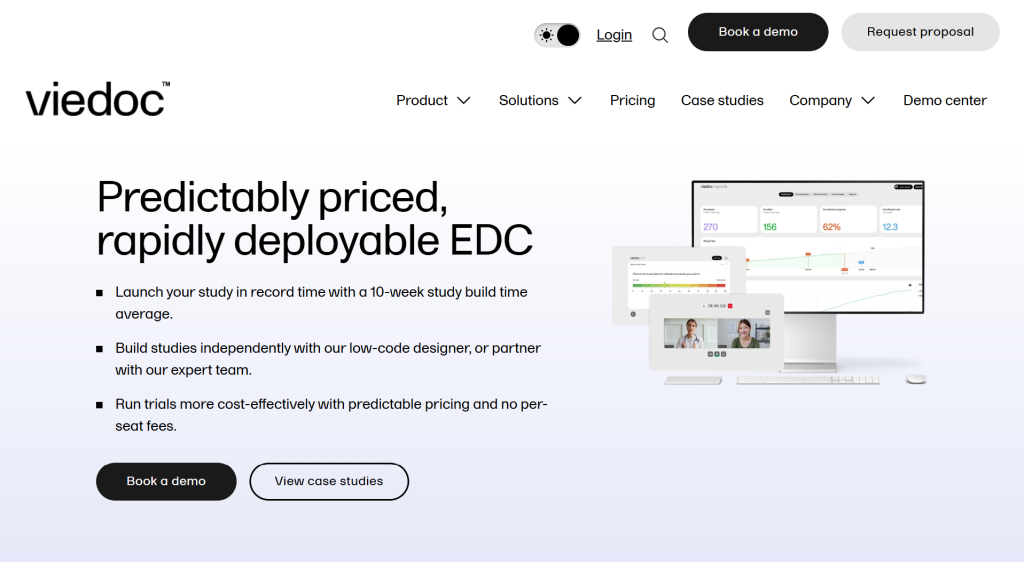
Viedoc operates in clinical trial technology not a naturally visual industry. Yet its website manages to feel genuinely fresh and uncluttered.
The design uses light gradients, generous whitespace and a restrained palette of black, white and soft purple accents.
Software UI screenshots are shown inside modern, frameless containers rather than harsh device mockups, which gives the screenshots a lighter, more accessible feel.
This is one of the strongest examples of simple business website design in the B2B space, where most competitors resort to cluttered, jargon-heavy layouts.
Key Takeaways:
- Even technically complex products benefit from minimal, accessible design.
- Use frameless or lightly framed containers for UI screenshots instead of heavy device mockups.
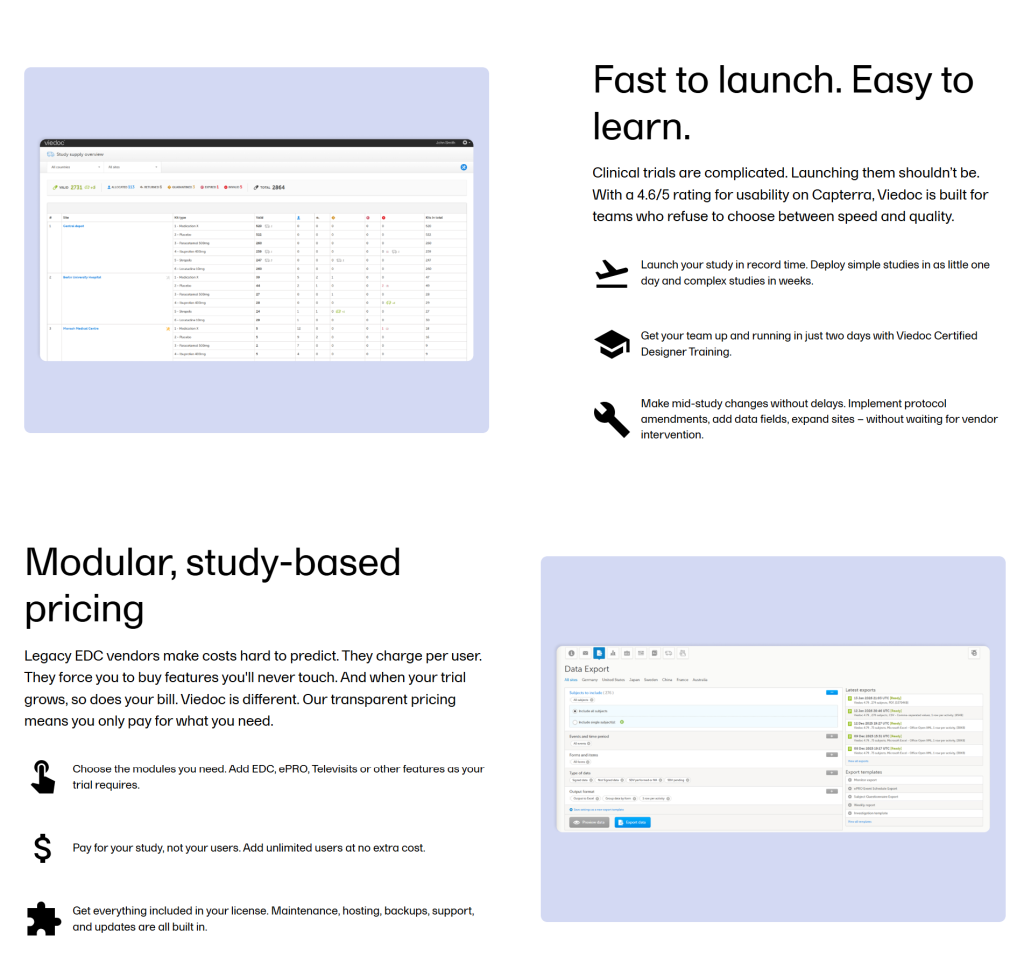
- A restrained accent color (one, used sparingly) is more memorable than a rainbow palette.
- Great clean UI website examples model for SaaS, tech and professional services companies.
12. Ramp: Bold Hero, Minimal Core
Website: ramp.com
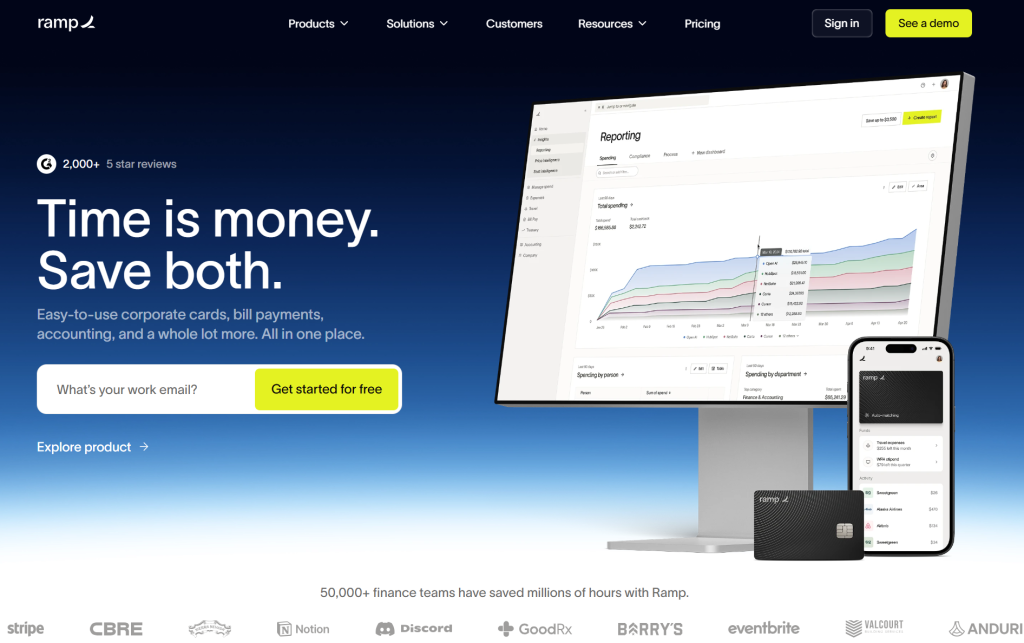
Ramp is a corporate card and spend management platform and its website is a smart lesson in modern website design examples for fintech.
The hero section uses striking imagery that commands attention but as you scroll deeper, the design becomes progressively more minimal, shifting to a near-monochromatic palette that lets product features do the talking.
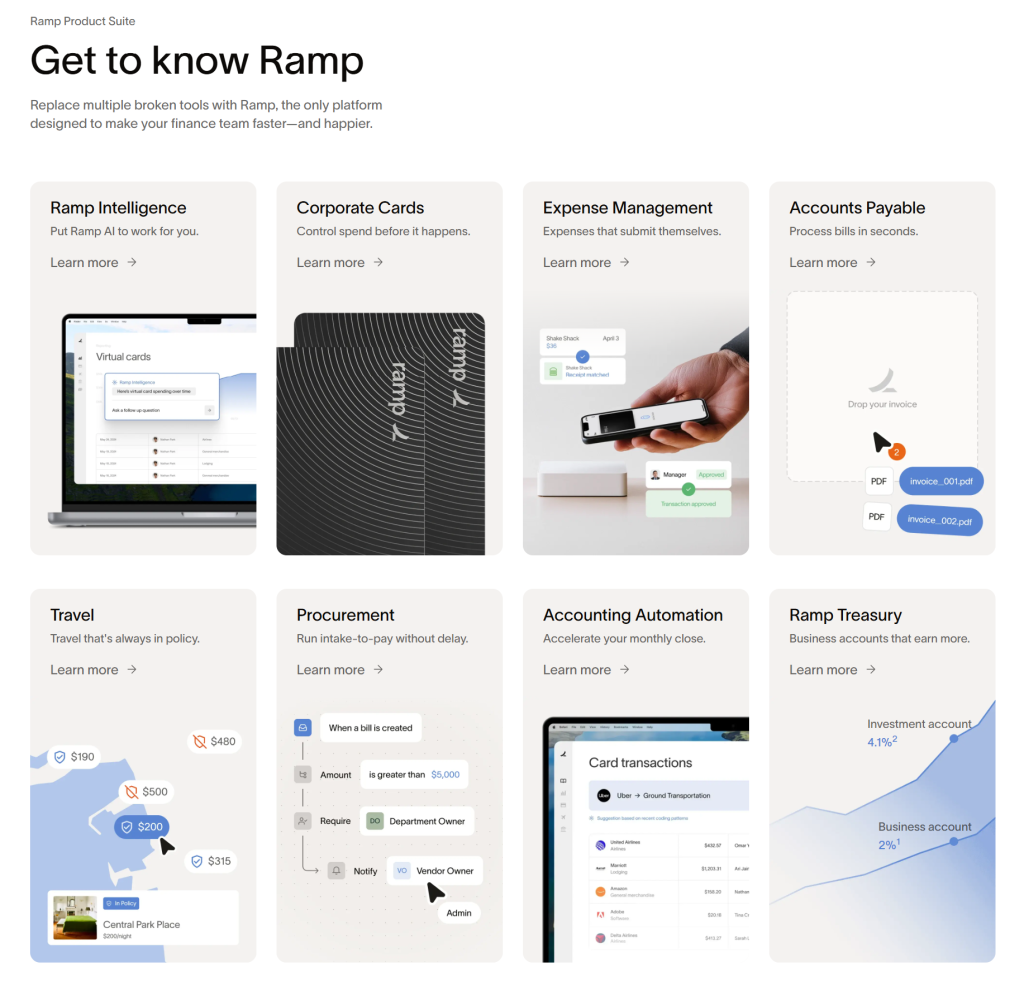
Subtle motion explains product functionality without disrupting the clean layout.
Key Takeaways:
- A “loud hero, quiet depth” structure is effective for conversion: capture attention first, then build the case.
- Product screenshots integrated with branded elements (rather than isolated) feel more connected and trustworthy.
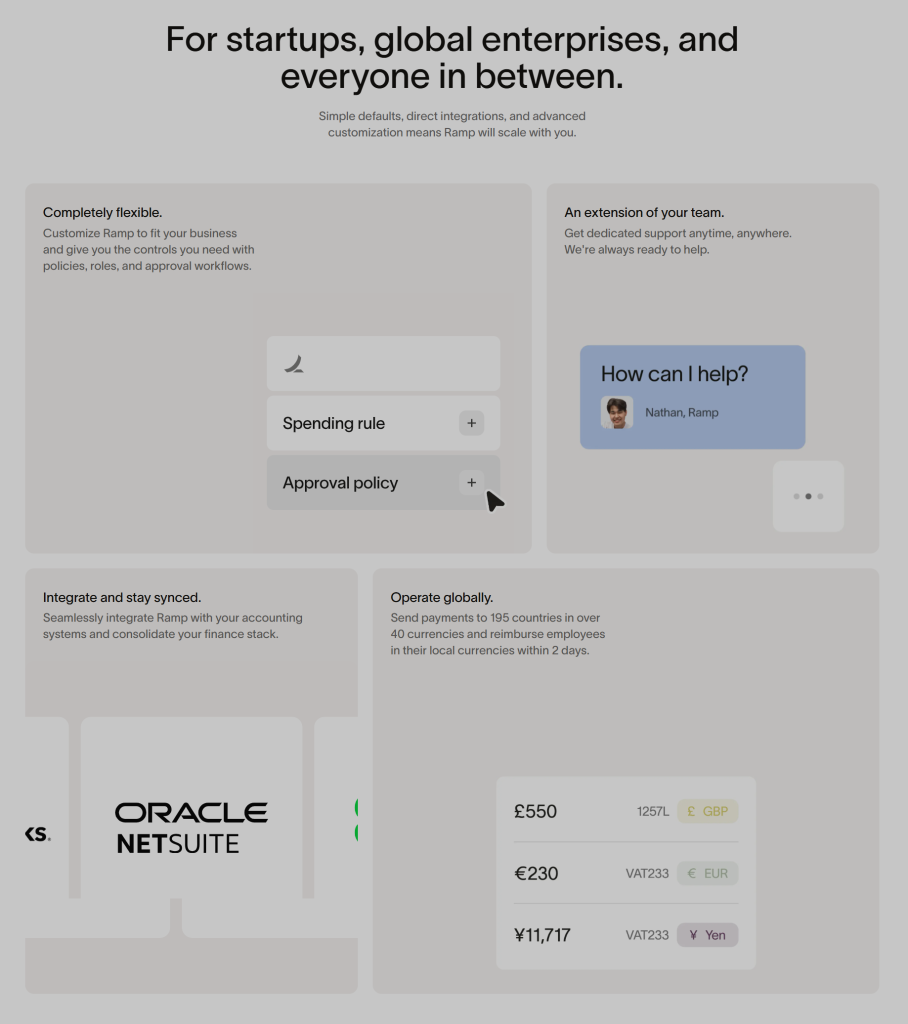
- Monochromatic deep-dives keep long pages from feeling cluttered.
- Strong UI UX inspiration websites reference for fintech and SaaS brands.
13. Pitch: Presentation Software That Presents Itself Well
Website: pitch.com
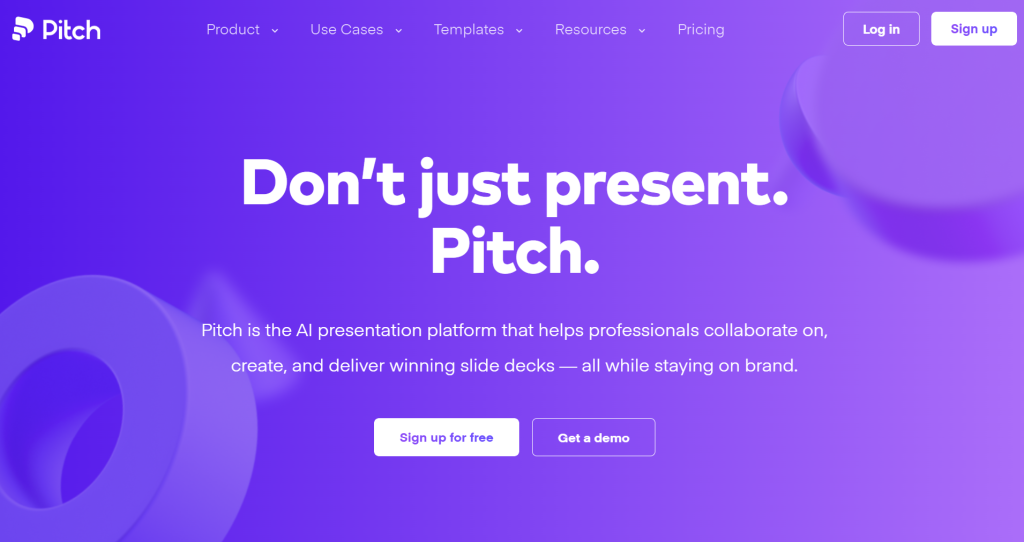
Pitch is headquartered in Berlin and competes in a very crowded category, yet its website instantly feels different.
The design leads with bold, confident typography on a clean background, uses actual product screenshots to prove its own visual quality and maintains a consistent, restrained color palette throughout.
The homepage is essentially one long, well-paced argument for why Pitch is worth trying, built without a single cluttered section.
Key takeaways:
- Product screenshots that look genuinely well-designed build more trust than any marketing copy can.
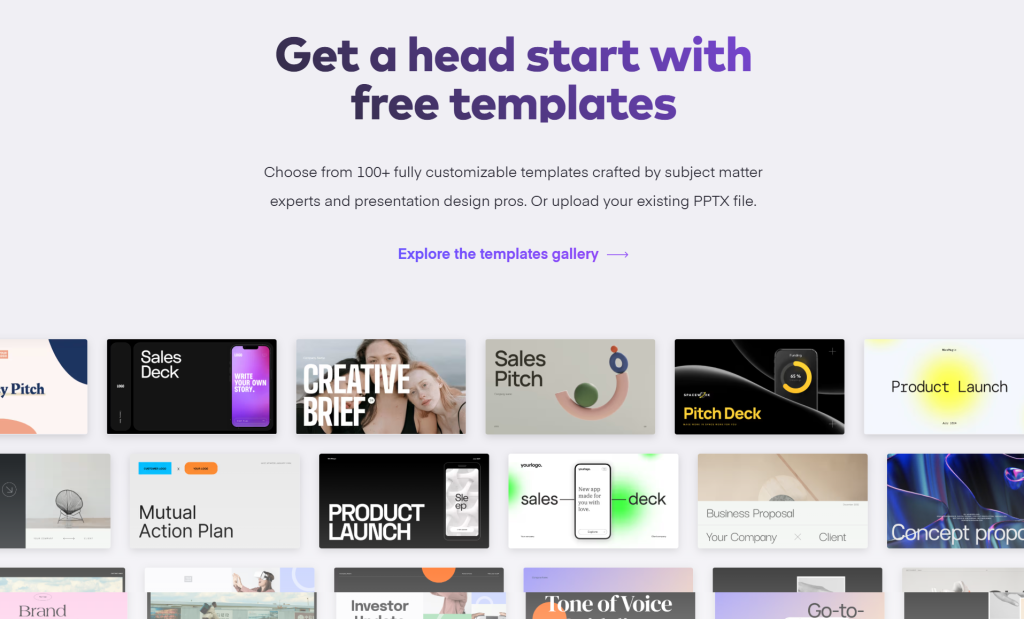
- A single consistent accent color used throughout the entire page creates brand recognition almost without trying.
- The homepage follows a clean rhythm: headline, proof, feature, proof, CTA. It works every time.
- A strong clean website design inspiration pick from Europe’s growing SaaS scene.
14. Monograph: Typography as the Hero
Website: monograph.com
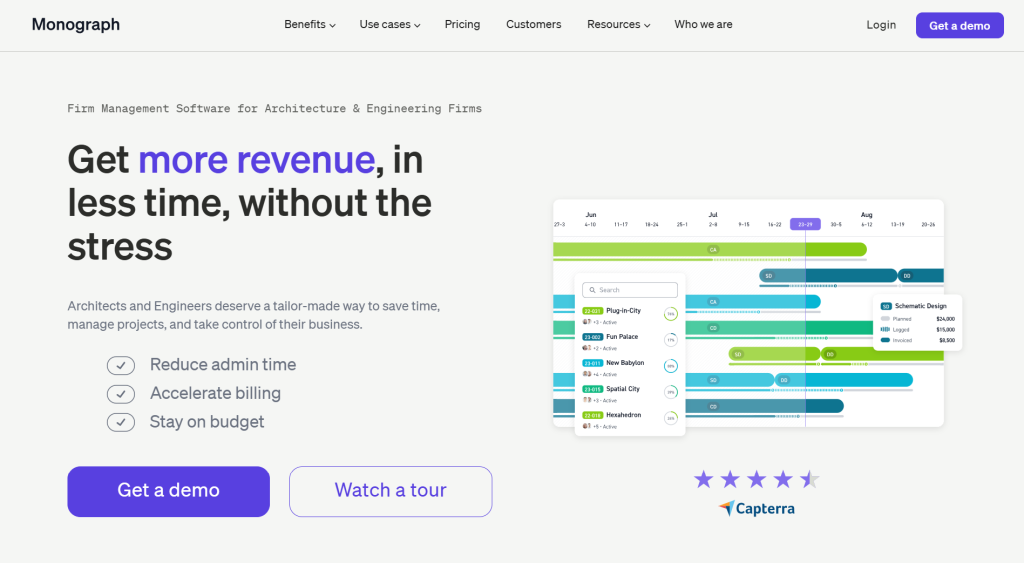
Monograph is a project management tool for architects and its website takes a bold approach to minimalist web design: it leads entirely with large typography and a subtle gradient background.
No hero photography, no illustrated mascots, no product screenshots above the fold. Just a headline, a subline and a CTA.
The sticky left sidebar features a single sentence and the two-part footer is anchored by a massive “Monograph” wordmark. Every choice reinforces the core identity.
Key Takeaways:
- Oversized, confident typography can substitute entirely for hero images.
- A sticky sidebar with minimal content (even a single sentence) creates persistent brand presence.
- Gradient backgrounds add subtle warmth and depth without visual complexity.
- One of the most overlooked responsive simple websites design references in the SaaS category.
15. Aarron Walter: The Personal Brand Portfolio
Website: aarronwalter.com
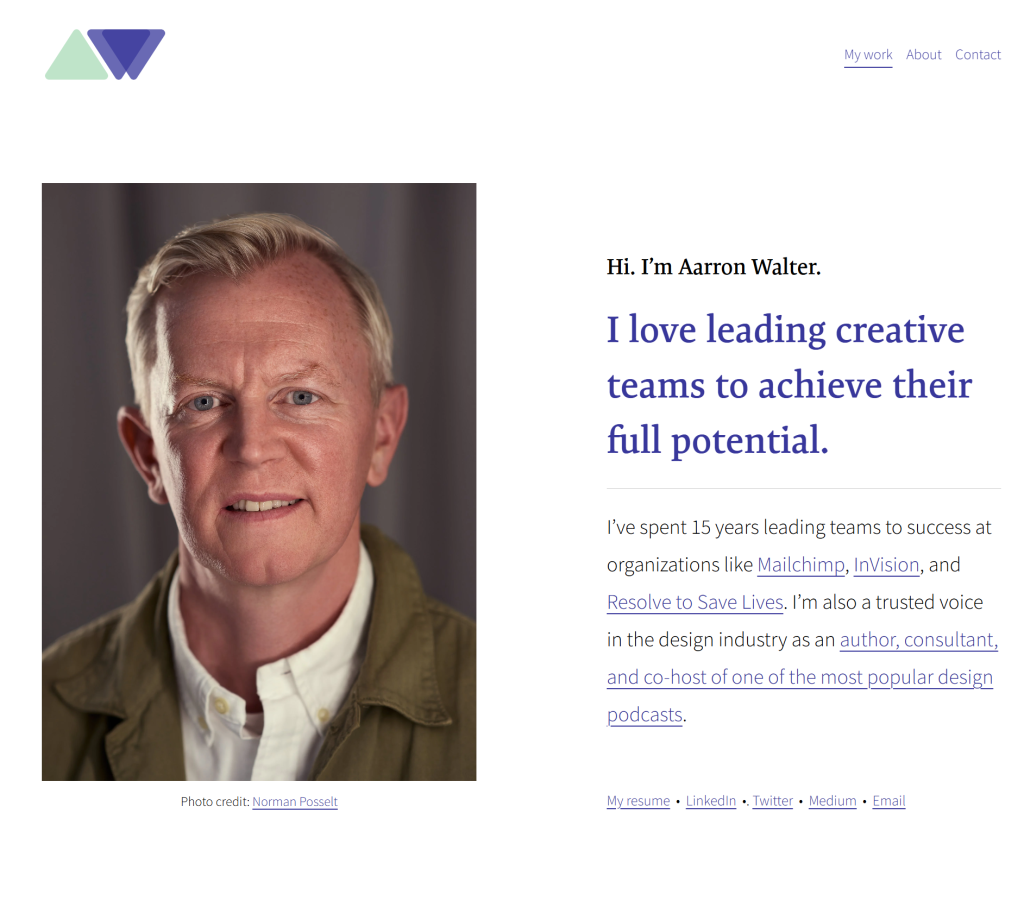
Aarron Walter is a UX leader who has worked with Mailchimp and InVision and his personal website is a clinic in how to present a professional personal brand cleanly. The hero section introduces him with a clear professional statement linked directly to portfolio pages.
Navigation uses obvious anchor text (no mysterious icons). The design is simple, structured and efficient and it communicates competence before the visitor reads a single word of content.
Key Takeaways:
- Personal portfolio sites should answer three things immediately: who you are, what you do and how to reach you.
- Anchor-text links within body copy are cleaner and more readable than button grids.
- A simple website structure (About → Work → Contact) is almost always the right architecture for personal brands.
- Solid minimalist homepage design benchmark for freelancers, consultants and creative professionals.
How Businesses Can Build Simple, Beautiful Websites With Element Pack Pro
Every website in this list shares something: intentional design decisions made entirely in service of the user.
None of them happened by accident and none of them require a large agency budget, especially when you are building on WordPress.
Element Pack Pro is the most comprehensive Elementor addon available, trusted by over 100,000 active users and rated 4.6 out of 5 on WordPress.org across more than 429 reviews.
It is built by BdThemes, a WordPress plugin company that has been creating design tools since 2012 and regularly publishes practical content on landing page types, Elementor workflows and web design best practices for designers and developers at every level.
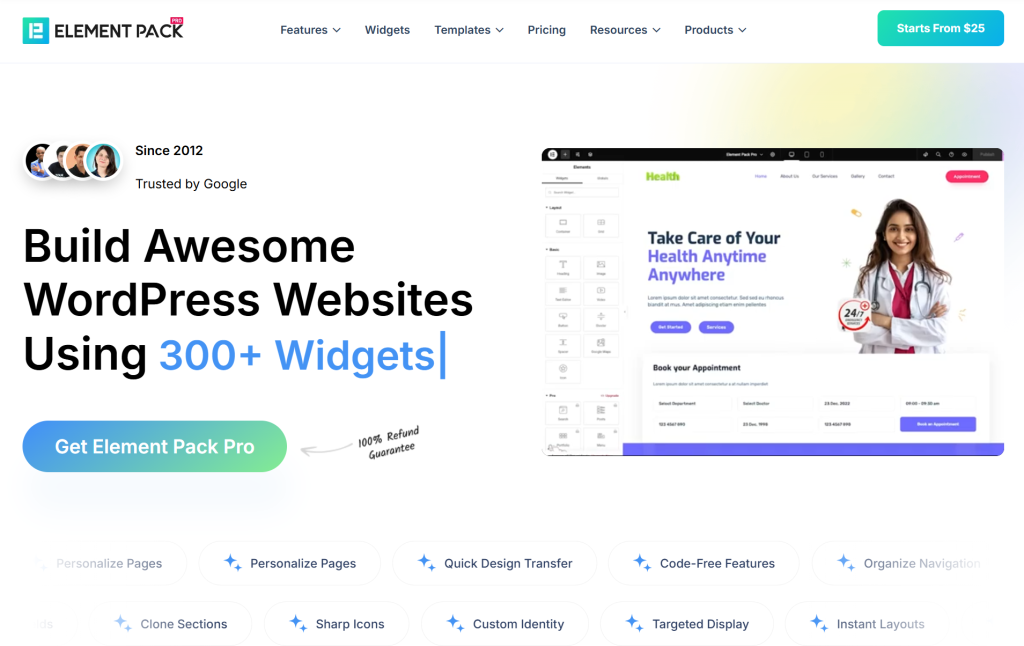
Here is exactly how Element Pack Pro helps businesses and designers achieve the clean, focused layouts you have been looking at throughout this piece.
Ready Pages: Launch a Clean Design Immediately
Element Pack Pro’s Ready Pages library gives you access to niche-specific, professionally designed full-page templates you can import with a single click.
Whether you are building for a SaaS product, a service business, a travel brand, a gym, or an ecommerce store, there is a Ready Page template built on clean design principles: generous whitespace, restrained typography and a focused layout ready to go from day one.
These are not generic placeholder templates. They are thoughtfully structured pages built to be publication-ready with minimal customization. If you want to explore the strongest options, the walkthrough of the top 20 Element Pack ready page templates for Elementor is a solid place to start.
Ready Blocks: Build Section by Section
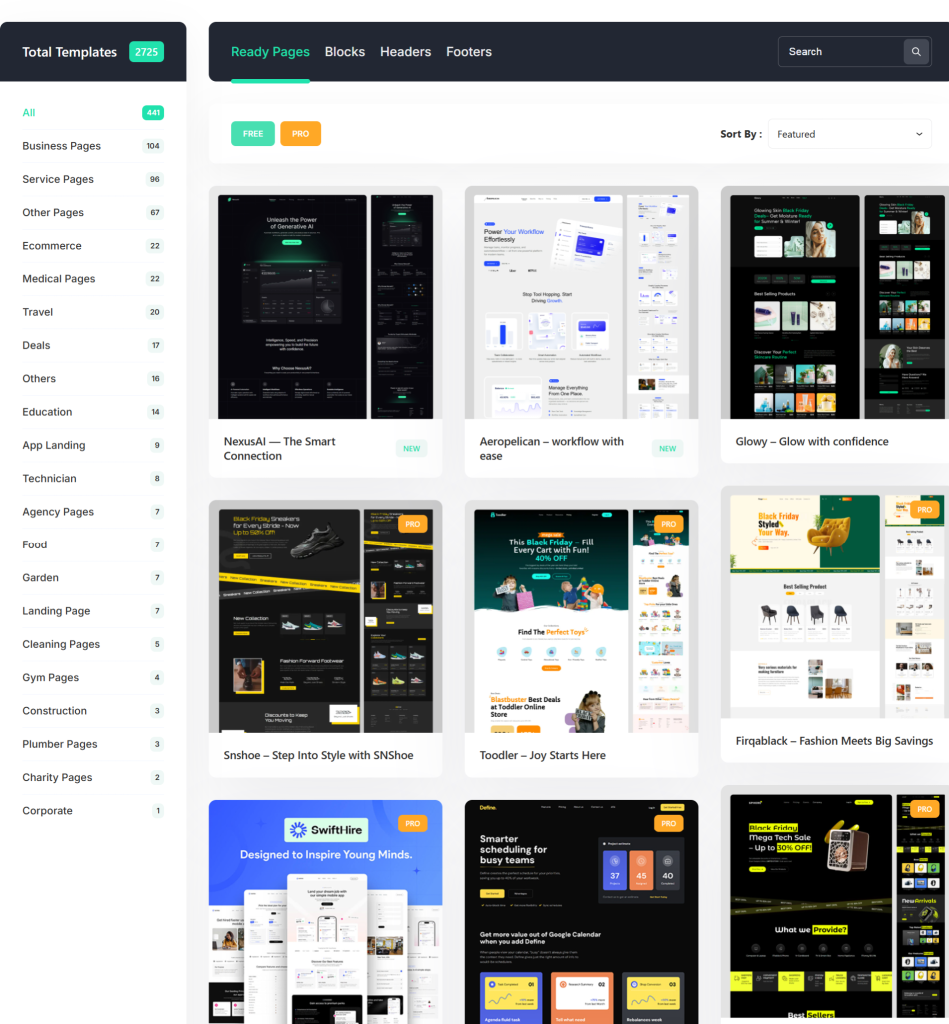
If you prefer building custom layouts rather than starting from a complete page template, Ready Blocks gives you individually designed sections: heroes, feature grids, testimonials, pricing tables, footers and more, all styled consistently and built for clean presentation.
This approach works especially well for simple landing page design. You assemble a high-quality page by dropping in a hero block, a features block, a social proof block and a CTA block. Each one is already designed to work. You populate your content and you are done. The Ready Headers and Ready Footers extend this system to the full site structure, so everything stays consistent from top to bottom.
2,700+ Templates Inside the Elementor Editor
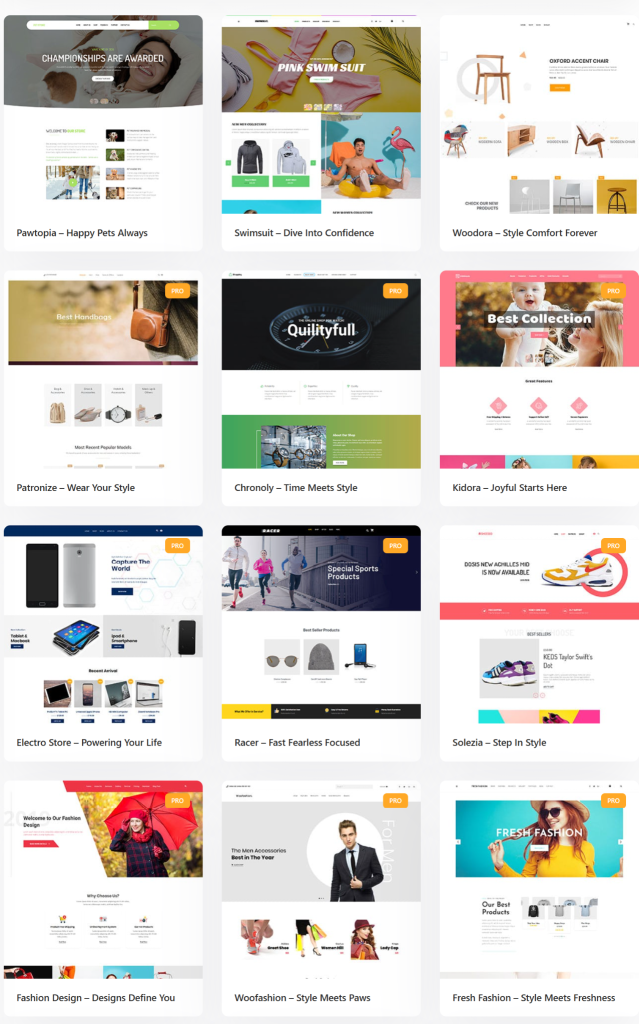
One of Element Pack Pro’s most consistently praised features is its in-editor template library, accessible without ever leaving the Elementor workspace. With over 2,700 professionally crafted templates available at a click, you have continuous access to clean website design inspiration that you can modify and deploy immediately. No tab-switching, no external browsing, no losing your train of thought mid-build.
300+ Widgets Built for Clean, Functional Design
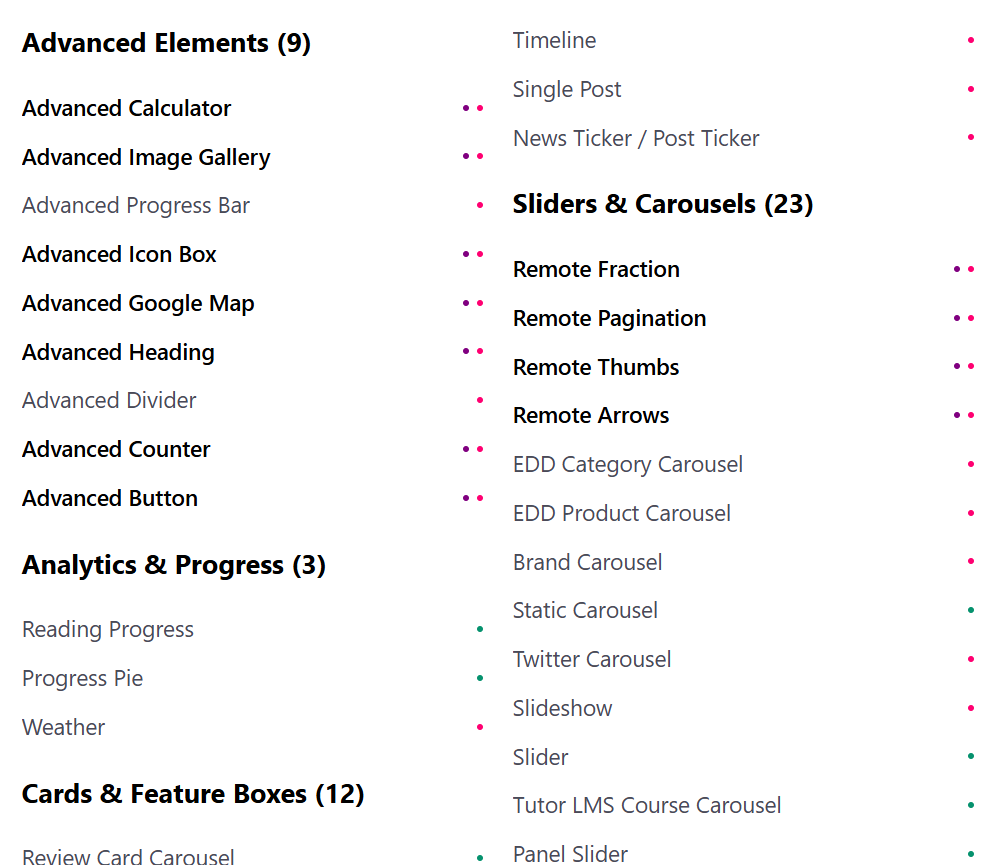
Element Pack Pro ships with more than 300 Elementor widgets. Here are the ones most relevant to the minimalist design patterns you have been looking at throughout this list.
For visual layouts, the Advanced Image Gallery, Portfolio Gallery, Hover Box and Dynamic Grid widgets help you build the kind of clean, image-led grids you see on Mogutable, Lars Tornoe and Candy Black.
For typography-led designs, the Advanced Heading widget paired with the Text Gradient Background extension lets you create the kind of oversized, confident headline treatments that make sites like Resend so instantly readable.
For navigation, the Mega Menu,Offcanvas Sidebar andNavbar widgets let you build transparent headers, floating navigation bars and slide-in menus, the exact patterns you see on Bedow, ETQ Amsterdam and Scope Copenhagen.
For subtle motion, theFloating Effects, Parallax Effects, Transform Effects and Scroll Fill Effect widgets bring in purposeful animation without any of the visual noise that kills a minimal layout.
For ecommerce, the full WooCommerce suite including the WooCommerce Mini Cart, Variation Swatches and Checkout Page widgets gives you everything needed to build a clean, minimal online store without writing any custom PHP. If you want to go deeper on WooCommerce store design that actually converts, the BdThemes blog has a solid collection of WooCommerce-focused tutorials and plugin guides worth exploring.
Live Copy-Paste: Move Fast Between Projects
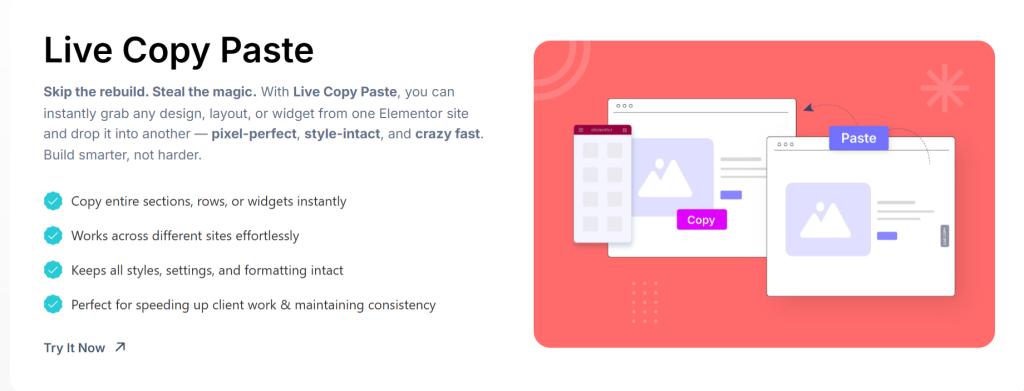
Element Pack Pro’s Live Copy-Paste feature lets you copy any Elementor section or widget from any site and paste it pixel-perfectly into your own project with two clicks. For designers and agencies managing multiple WordPress client sites, this alone saves hours per project and makes it genuinely enjoyable to maintain design consistency at scale.
What Every Great Simple Website Has in Common
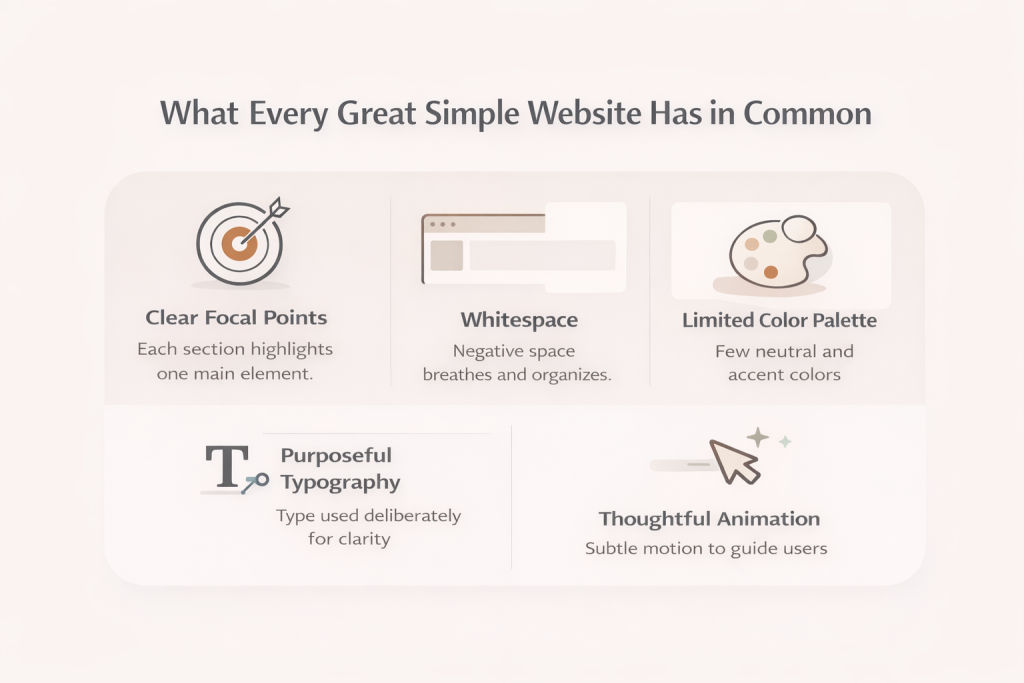
After spending time with all 15 of these websites, five principles show up without exception. These are the things worth internalizing before you start your next build.
One focal point per section. Every scroll position has a dominant element: a headline, an image, or a call to action. The eye is never left without guidance, even on the most minimal pages.
Intentional negative space. Whitespace is not emptiness. It is active. It creates breathing room, establishes hierarchy and makes the contained elements feel more significant than they would in a busier layout.
A restrained color palette. The strongest examples use one neutral base, one or two accent tones and disciplined application across the whole site. Color is information, not decoration.
Typography that carries structural weight. In minimalist web design, type size, weight and spacing do the work that graphics or decorative elements might do on a busier page. Typography is not supporting the design. It is the design.
Motion that serves the user, not the portfolio. The best modern UI design inspiration uses animation to explain, guide, or create a moment of delight. If removing an animation would not hurt the page, it probably should not be there.
Final Thoughts
In 2026, with users more impatient and more discerning than ever, a clean and focused website is a genuine competitive advantage. Every unnecessary element you cut is one less thing standing between your visitor and the action you want them to take.
If you are building on WordPress and want to create sites that reach this level of clarity and quality, Element Pack Pro gives you the widgets, templates and tools to make it happen faster than you would expect, without writing code.
You can sStart with the Ready Pages to find your foundation, build it out with300+ purpose-built widgets, lock in site-wide consistency with the Theme Builder and keep learning through the Element Pack blog which publishes practical Elementor tutorials regularly.
The result will be exactly what the best websites in this list achieve: a site that feels effortless, because every single element in it is quietly working hard.
Supreakshya Shrestha
The BdThemes team builds WordPress plugins trusted by 3M+ users worldwide. We write about web accessibility, WCAG compliance, and inclusive design.